


Discovering the power of homemade detergents can transform your approach to household cleaning. DIY cleaners are cost-effective and promote a healthier living environment, free from harsh chemicals.
Learn how to whip up an all-purpose cleaner using simple ingredients like lemon and vinegar. This guide covers the benefits of making your own cleaner, the essential ingredients, a step-by-step recipe, and alternative cleaning solutions.
The Benefits of Making Your Own Cleaner
Crafting homemade detergents has many great perks, such as saving money, improving your health, and enjoying the peace of mind that comes from knowing exactly what’s in it.
When you choose a DIY cleaner, you can concoct an eco-friendly solution that is perfect for your household while avoiding the harsh chemicals lurking in many commercial products. Furthermore, natural cleaning solutions are generally safer for children and pets, making them a fantastic choice for family homes.
With some simple and effective recipes, you can tackle grime and stains without compromising your health or the environment.
Cost-Effectiveness and Health Benefits
Creating your DIY cleaner is not just a doddle; it’s also a budget-friendly way to keep your home spick and span while keeping your family safe. By using non-toxic ingredients, you can avoid the potential health risks of commercial cleaners, which often hide harmful chemicals.
Additionally, making your cleaners helps the environment and saves you some money on those expensive commercial products.
This method helps you maintain a healthier indoor environment and enhances your well-being by reducing exposure to toxic substances that can trigger allergies or respiratory issues. When you choose homemade solutions, you’re not just cutting your shopping bills but also supporting sustainability by reducing plastic waste from all that commercial packaging.
Many common household ingredients, like vinegar and bicarbonate of soda, pack a punch when tackling dirt and grime without any harsh additives. So, you can feel great about your savings while doing your part for your family’s health and the planet.
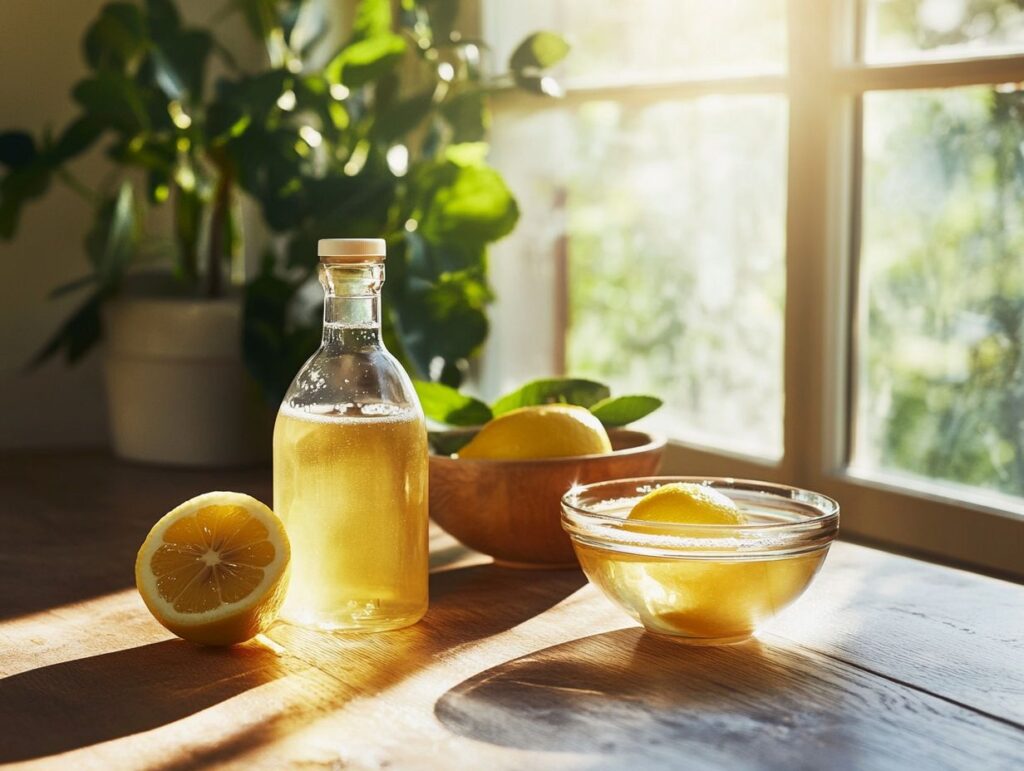
Ingredients for DIY All-Purpose Cleaner
The secret to whipping up an effective DIY all-purpose cleaner lies in its simple yet powerful ingredients, such as vinegar and lemon juice. These natural cleaning agents aren’t just effective but also biodegradable, making them a great choice for your home.
When you combine vinegar’s benefits with lemon’s antibacterial properties, you end up with a cleaning solution that’s tough on grime but safe for all household surfaces. By sticking with natural ingredients, you can create an effective and environmentally friendly cleaner.
Lemon and Vinegar as Cleaning Agents
Lemon and vinegar are the most powerful natural cleaning agents you can bring into your home. With its refreshing citrus scent, Lemon juice isn’t just great for cutting through grease—it also doubles as a natural antibacterial agent. Then there’s vinegar, known for its grime-busting and odour-neutralising powers. When you combine these two, you’ve got a DIY cleaner that leaves your surfaces sparkling and smelling fresh, too.
Their unique properties make them super effective for all household cleaning tasks. For example, a mix of lemon juice and vinegar can tackle those stubborn stains on your worktops and chopping boards, providing a safe solution for food prep areas. If you dilute vinegar, it works wonders on soap scum in the bathroom, while lemon juice can freshen up your laundry with its natural bleaching effect.
Just a heads up: don’t mix these two directly; they’ll create unwanted fizzing. Always ventilate the area when using vinegar, and consider wearing gloves to protect your skin from irritation.
Step-by-Step Guide to Making the Cleaner
Creating your own all-purpose cleaner is a doddle. It only requires a few ingredients and a spray bottle. First, gather your essential ingredients, such as vinegar, lemon juice, and essential oils.
Then, follow this straightforward step-by-step guide to whip up a powerful cleaning solution. You’ll save some money and enjoy the satisfaction of knowing exactly what’s in your homemade cleaner, tailored to your cleaning needs.
Let’s dive into the instructions and pick up some handy cleaning tips!
Instructions and Tips
To whip up your own DIY all-purpose cleaner, grab a spray bottle and mix equal parts vinegar and water. Throw in a few tablespoons of lemon juice for an extra cleaning boost and a pleasant scent. Keeping that dilution ratio right is key—it will make your cleaner effective without damaging your surfaces.
You can use this concoction on a variety of surfaces, from kitchen worktops to bathroom tiles. Remember these handy tips to get the most out of it!
- A 1:1 ratio of vinegar to water works wonders for everyday cleaning, but if you’re facing serious grime, bump it up to a 2:1 vinegar-to-water ratio.
- In terms of windows or glass, you’ll want to mix three parts water to one part vinegar to keep those pesky streaks at bay.
- For the best results, tackle frequently used surfaces daily or weekly, while the less frequently used spots can be cleaned monthly.
- Always do a spot test on delicate materials, and avoid using this solution on natural stone to keep it in good condition.
Uses for the All-Purpose Cleaner
Your homemade all-purpose cleaner is extremely versatile and can handle a variety of surfaces around your home. From the kitchen to the bathroom, this cleaner tackles dirt, grime, and stains like a pro, making it an essential in your cleaning kit.
Whether wiping down worktops, polishing mirrors, or addressing bathroom fittings, knowing how to use this all-purpose cleaner will simplify your cleaning routine and give you impressive results.
Surfaces and Areas it Can Clean
Your DIY all-purpose cleaner is a superstar when tackling various surfaces in your home—think kitchen worktops, bathroom tiles, and even glass surfaces like windows. It’s designed to kick grime to the curb, making it your go-to for stubborn stains and spills in the kitchen, as well as a trusty bathroom ally against soap scum and mould. Knowing how versatile your cleaner is can help you keep your home sparkling with minimal effort.
This handy solution works wonders on wooden furniture and stainless steel appliances, leaving everything gleaming without ruining any finishes. When using it on kitchen worktops, spray it on, let it sit for a few minutes, and then wipe it down with a soft cloth. A quick scrub on the tiles for the bathroom can banish any lingering mould. And for those glass surfaces? A microfiber cloth is your best friend for that streak-free shine. Just remember to check for any loose debris or dust before you start so you get the most out of your cleaning efforts!
Alternatives to Lemon and Vinegar Cleaner
While lemon and vinegar are great go-to’s for your DIY cleaner, there are plenty of other natural cleaning solutions you can explore as alternatives. Ingredients like bicarbonate of soda, essential oils, and castile soap pack a punch when it comes to cleaning.
Plus, they bring their unique scents and additional cleaning benefits to the table. Exploring these options spice up your homemade cleaner repertoire and helps you tackle all sorts of cleaning tasks around your home.
Other Natural Cleaning Solutions
Along with lemon and vinegar, you can supercharge your cleaning routine with natural solutions like bicarbonate of soda, essential oils, and castile soap. Bicarbonate of soda is your gentle superhero, acting as both an abrasive and a deodoriser—perfect for scrubbing away those stubborn stains. Essential oils bring delightful scents to the mix and pack a punch with their antibacterial properties. Castile soap, made from plant oils, is a great base for many DIY cleaners, helping you keep your home eco-friendly.
Adding these alternatives to your daily cleaning routines allows you to create a fresher living space without exposing your family to harsh chemicals. For example, when you mix bicarbonate of soda with water, it forms a paste that’s fantastic for tackling stubborn grime on various surfaces. Essential oils like tea tree and lavender freshen the air and help kick unwanted bacteria to the curb.
Similarly, combining castile soap with water and a few drops of essential oil gives you a powerful all-purpose cleaner. These eco-friendly solutions ensure a greener home environment and handle everyday messes like champions.